
Complete Property Contents Removal
Full House Clearance in Preston
Explain what needs removing from the property. Get a Free Estimate
A full house clearance is usually needed when a property is being sold, handed back, renovated or prepared for its next occupant. The aim is to remove the contents that have been agreed for clearance, rather than dealing with individual pieces over several visits. Depending on the property, that could include furniture, everyday household belongings, contents of cupboards and items stored in additional rooms.
Preston House Clearance accepts requests for full house clearance and passes them to an independent local contractor. The contractor contacts you to assess the amount of work, explain what can be included and provide an estimate. It is important to make clear whether the house is completely furnished, partly emptied or still occupied.

The description full house clearance does not automatically mean every object and fitting will be removed. The actual scope should be agreed in advance, including any retained possessions, difficult items and parts of the property that require separate attention.
Sofas, tables, wardrobes, beds, cabinets and smaller household belongings may form much of the work. Explain whether large furniture will need dismantling or whether access through the property is restricted. Items intended for family members, a new owner or a charity should be clearly identified before the clearance begins.
Cupboards, drawers and utility spaces can contain a surprising amount of material. Ask the contractor whether the agreed work includes loose kitchen contents, freestanding appliances and items from utility cupboards. Built-in fittings, appliances requiring disconnection and potentially hazardous substances need specific discussion rather than assumptions.
Lofts, cellars, garages and sheds are sometimes overlooked when describing a full clearance. They may contain bulky furniture, old tools, boxes and materials that have deteriorated in storage. Mention each area separately, especially when access involves ladders, narrow openings or outdoor structures.
Before work starts, make a list of anything that must remain. This could include property documents, keys, manuals, fixtures or personal possessions. The contractor should understand the boundaries of the job. Once work is finished, review the agreed rooms and discuss any contents that could not be removed.
You can describe the entire property in one request. We pass those details to an independent contractor for assessment.
The contractor can explain what the proposed estimate covers and whether particular items need separate arrangements.
Requests can involve houses, bungalows and flats, with the relevant access and storage details included.

Need to empty a complete property? Send the details and let an independent contractor assess the work.
Free — no obligations
Tell us the location, property type, number of rooms, approximate contents and any areas outside the main house.
We pass the request to an independent local contractor, who contacts you to discuss the proposed clearance.
The contractor assesses the work and explains the estimate. Confirm exclusions, access arrangements and the intended date before proceeding.
The contractor carries out the clearance under the arrangements made with you. Check the agreed areas afterwards where possible.
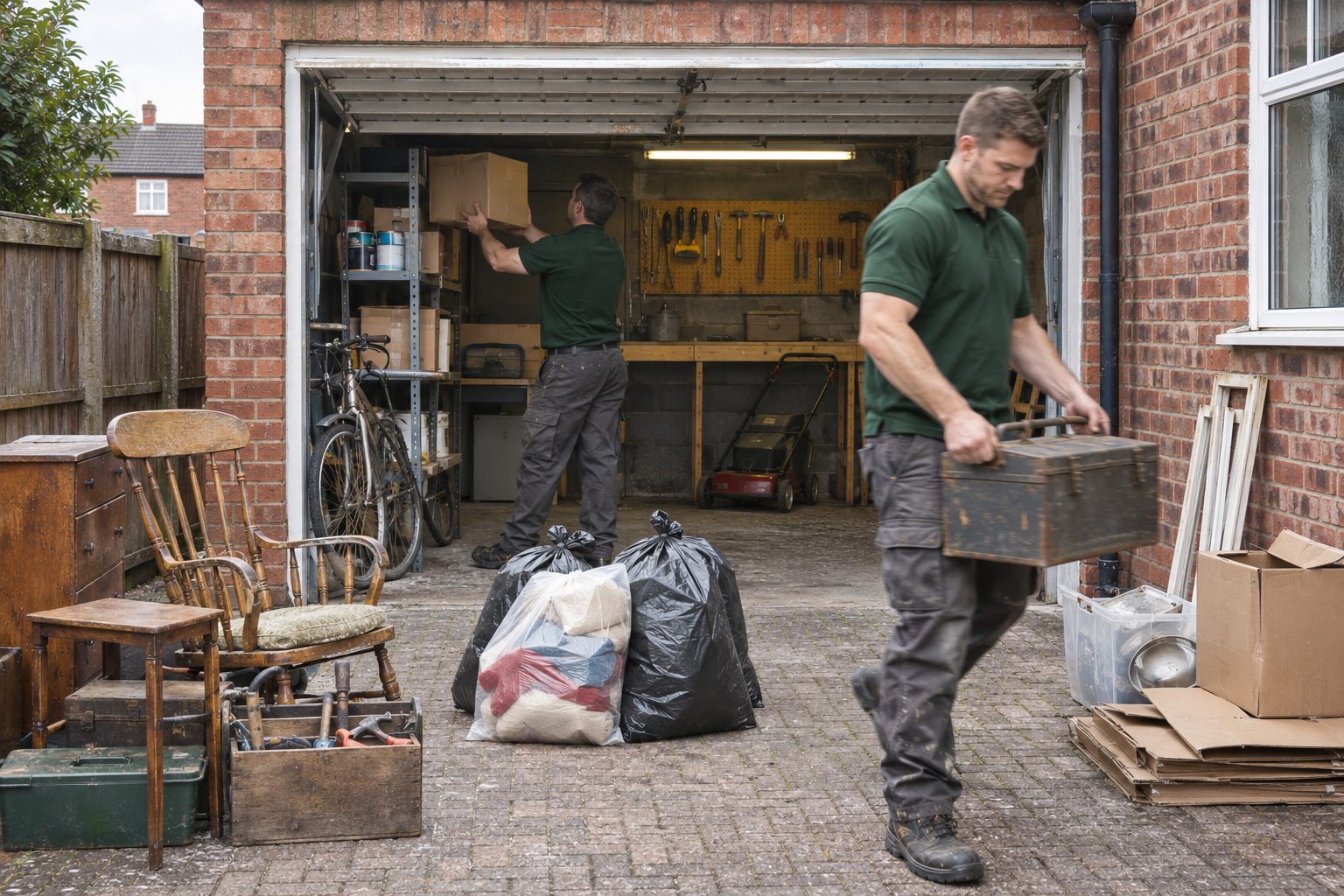
These can be included if agreed with the contractor. Explain whether cupboards contain loose belongings and ask for confirmation of the scope before work begins.
You can request removal of the agreed contents of a fully furnished property. The contractor will assess the amount of material, access and any exclusions before providing an estimate.
Carpet removal should be discussed separately because it involves more than collecting loose belongings. Ask the contractor whether lifting and removing carpets can be included.
The contractor should discuss anything that falls outside the agreed work. If the item is personal, potentially valuable or unsuitable for ordinary removal, ask for a decision before it is handled.